Products List
-
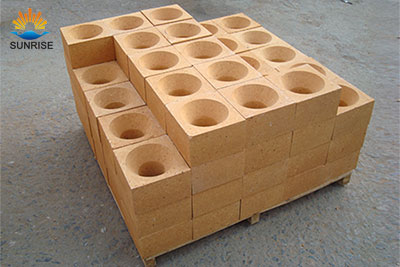
big fireclay bottom blocks
Description: Using big vibrating table and adopting special castables, the company produces furnace l...

-
fire clay bricks
Description Fireclay bricks are the most widely used refractories made from clay minerals. It can be ...
Refractory Knowledge
-
The Development of Refractory Brick
In recent 20 years, due to the implementation of large-scale blast furnace in iron and steel industry...

-
Brief analysis of porosity and water absorption of refractori
What is the definition of the porosity of refractory materials and what is the basis for determinatio...

-
Mullite insulation brick
The mullite insulation brick is a high alumina refractory material mainly composed of mullite (3Al2O3...

-
Silicone brick tips
Silica bricks are acidic refractory materials, strong resistance to acid slag corrosion, and its ther...

News Center
-
A Brief Analysis of Boiler Masonry and Its Function
Generally, small boilers are installed quickly and do not need to be built on site. For power plant b...

-
Factory Directly Supply With Popular Refractory Bricks in Ch
The use of kilns is inseparable from refractory bricks, but if the details of refractory bricks are n...

Introduction of high temperature performance of alkaline refractory bricks
Optimized for reduction and firing temperature increase. Ordinary alkaline products have a load softening temperature of 1550 ~ 1600 ° C; high-grade products: such as mirror dolomite brick, floor spinel brick, high-purity mirror brick, direct combined mirror lead brick, etc. at 1700 ° C or above: semi-recombination, re-bonding mold Anchor bricks can reach 1750 ~ 1800 °C. The high-temperature flexural strength of each alkaline refractory brick decreases with the increase of the test temperature, and the high-strength strength of the re-bonded mirror anchor brick with high Cr2O3 content is high. The alkaline brick added with the fused raw material has high temperature strength.
The thermal expansion rate of alkaline refractory bricks is higher than that of other products, and the thermal expansion rates of various alkaline refractory bricks with MgO as the main component have little difference. At 1600 °C, the linear expansion rate of the mirror brick is the largest, about 2.0%: the highest expansion ratio of the advanced mirror lead brick is 1.6% or so; other alkaline refractory bricks have a thermal expansion rate between the two.

The specific heat capacity of alkaline bonfire bricks is larger than that of silica bricks and clay bricks. The specific heat capacity of magnesium bricks is larger than that of other alkaline bricks. At 1000 °C, 1200 °C, 1400 °C, the specific heat capacity (kJ / (kg . K) ) of the mirror brick (MgO 97%) is 1.20, 1.22, 1.24, respectively; the specific heat capacity of the mirror anchor brick (Cr2O3 21%) is directly combined ( kJ/(kg·K )) are 1.02, 1.05, and 1.07, respectively.
If you have any needs our help or are interested in our products, you can click online advisorychat with us online, or call our customer service telephone: 0086-0371-63838939. We will sincerely serve for you!