Products List
-
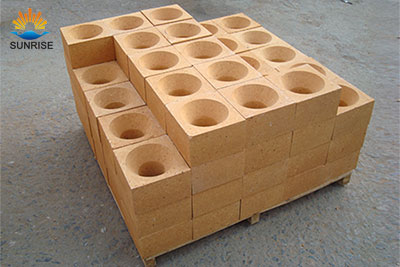
big fireclay bottom blocks
Description: Using big vibrating table and adopting special castables, the company produces furnace l...

-
fire clay bricks
Description Fireclay bricks are the most widely used refractories made from clay minerals. It can be ...
Refractory Knowledge
-
Mullite insulation brick
The mullite insulation brick is a high alumina refractory material mainly composed of mullite (3Al2O3...

-
Brief analysis of porosity and water absorption of refractori
What is the definition of the porosity of refractory materials and what is the basis for determinatio...

-
The Development of Refractory Brick
In recent 20 years, due to the implementation of large-scale blast furnace in iron and steel industry...

-
Silicone brick tips
Silica bricks are acidic refractory materials, strong resistance to acid slag corrosion, and its ther...

News Center
-
A Brief Analysis of Boiler Masonry and Its Function
Generally, small boilers are installed quickly and do not need to be built on site. For power plant b...

-
Factory Directly Supply With Popular Refractory Bricks in Ch
The use of kilns is inseparable from refractory bricks, but if the details of refractory bricks are n...

What are the advantages and disadvantages of clay bricks?
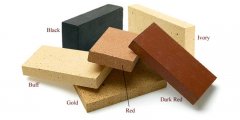
1. Clay bricks are made from local materials, are cheap, durable, and have the advantages of fire resistance, heat insulation, sound insulation, and moisture absorption. They are widely used in civil engineering. Waste broken bricks can also be used as aggregates for concrete.
2. Waste and broken bricks can also be used as aggregate of concrete.
3. Fly ash bricks are made of fly ash as the main raw material, mixed with coal gangue powder or clay and other cementing materials, and are compounded, shaped, dried and roasted to make full use of industrial waste residues and save fuel.

Self-importance
The weight of clay bricks is relatively larger than the dead weight of other wall masonry materials, which makes the structure need to bear a larger dead weight, and the construction cost increases.
2. Poor sound insulation
The sound is transmitted to the clay bricks. Due to its small porosity, the sound is not isolated, and the decibel of the sound is reduced little, while other masonry materials, such as now using more radon aerated blocks, have a larger void ratio and sound insulation obvious.
3. Large environmental damage
Since clay bricks are mainly made by sintering excavated soil, soil damage and vegetation damage, etc., cause soil erosion and severe damage to the environment. Therefore, the country is gradually stopping the use of clay bricks in engineering.
If you have any needs our help or are interested in our products, you can click online advisorychat with us online, or call our customer service telephone: 0086-0371-63838939. We will sincerely serve for you!