Products List
-
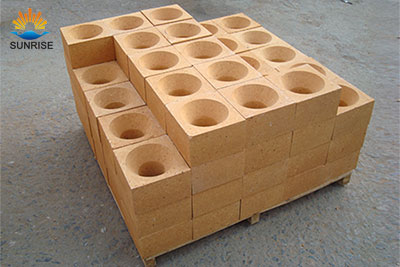
big fireclay bottom blocks
Description: Using big vibrating table and adopting special castables, the company produces furnace l...

-
fire clay bricks
Description Fireclay bricks are the most widely used refractories made from clay minerals. It can be ...
Refractory Knowledge
-
Mullite insulation brick
The mullite insulation brick is a high alumina refractory material mainly composed of mullite (3Al2O3...

-
The Development of Refractory Brick
In recent 20 years, due to the implementation of large-scale blast furnace in iron and steel industry...

-
Brief analysis of porosity and water absorption of refractori
What is the definition of the porosity of refractory materials and what is the basis for determinatio...

-
Silicone brick tips
Silica bricks are acidic refractory materials, strong resistance to acid slag corrosion, and its ther...

News Center
-
A Brief Analysis of Boiler Masonry and Its Function
Generally, small boilers are installed quickly and do not need to be built on site. For power plant b...

-
Factory Directly Supply With Popular Refractory Bricks in Ch
The use of kilns is inseparable from refractory bricks, but if the details of refractory bricks are n...

The Use Nature of Refractory Material
Refractoriness
Refractoriness is refractory material resist to high temperature function rather than melting performance, its meaning of refractoriness and melting point are different, melting point is refers to the crystalline phase and liquid phase of pure substance is in equilibrium temperature. And general refractory material is multiphase solid mixture composed of a variety of mineral, has no uniform melting point, but began to produce liquid phase under certain temperature, with temperature rising, the liquid phase ratio increases continuously, to a fixed temperature, solid phase can all melt for the liquid phase. Between the two fixed temperature range, both liquid phase and solid phase exist at the same time.
The chemical composition, mineral composition and its distribution of refractory products are the most basic factors to influence the refractoriness. Impurity elements with strong solvent effect, will seriously reduce the refractoriness of products. Uneven distribution of composition that cannot form an ideal high melting point mineral, will lead to lower refractoriness products, so damage the using performance of products, but the refractoriness of products doesn't mean its use temperature, because refractory material in use, processes through high temperature function at the same time, often with the solvent effect of load and external things and so on. Actually allowable working temperature is much lower than refractoriness, but, after all, the refractoriness index is one of the important reference frame to select reasonably big fireclay bottom block.

Refractoriness under load
The refractoriness under load of refractory material, also known as the high temperature load deformation temperature, defined as refractory products under persistent overheating conditions, bear deformation temperature under constant load. It said the refractory products at the same time resist the ability of high temperature and load effect.
Linear change on reheating
Linear change on reheating, also known as residual linear change, refers to after the refractory material heated to high temperature, happens the irreversible changes of its length. The specific definition is refractory products sample heated to the specified temperature, heat preservation time, after cooling to room temperature, the length produce residual expansion or contraction.
Thermal shock resistance
Refractory material in use process, the environment temperature change is inevitable.
If you have any needs our help or are interested in our products, you can click online advisorychat with us online, or call our customer service telephone: 0086-0371-63838939. We will sincerely serve for you!